Jobs | Openings | Work Culture
Request a Custom Growth Proposal
Talk to a Digital Doctor
Request a Custom Growth Proposal
Serving 40+ Countries
Book a free strategy consultation with experts
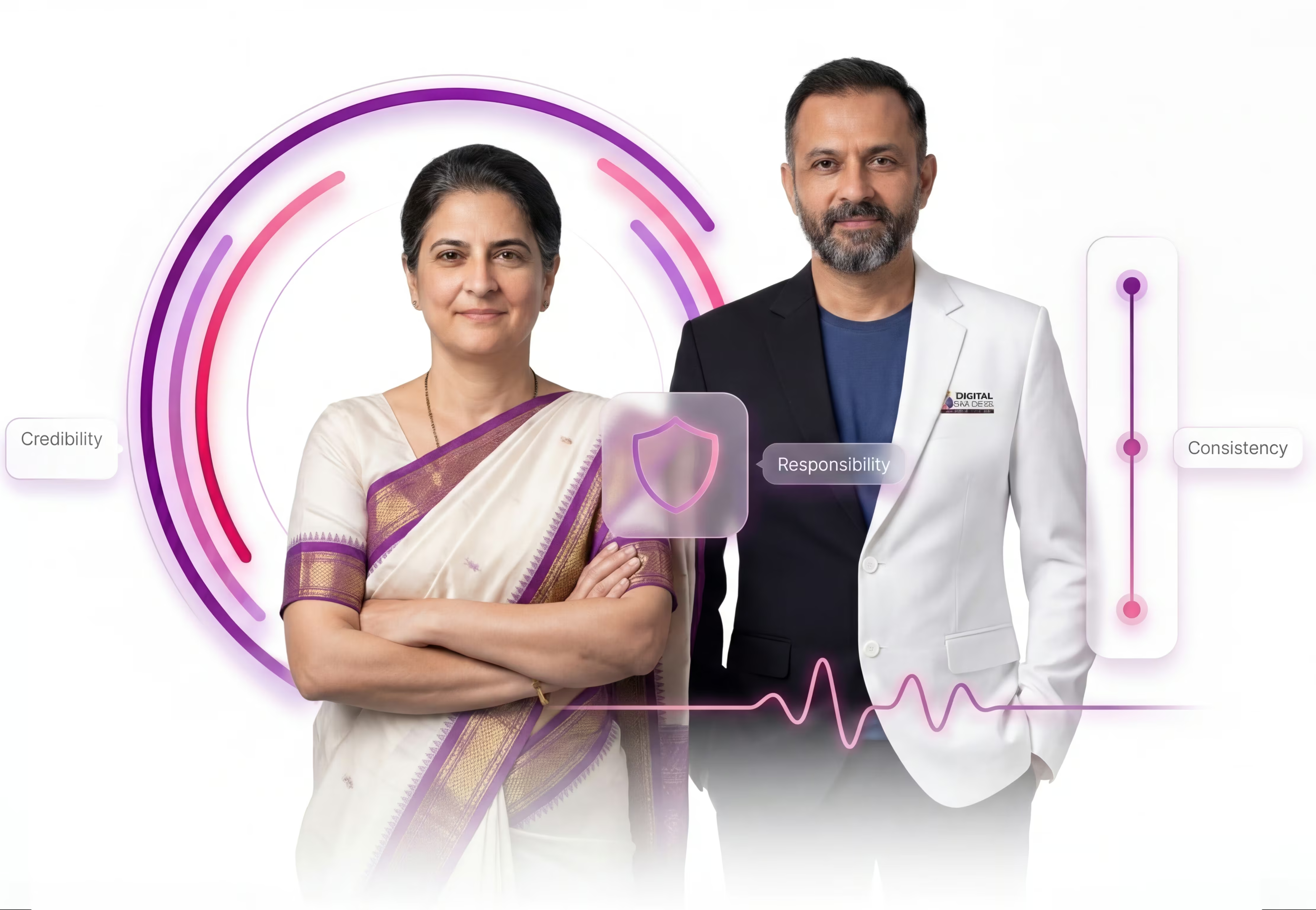
Public leadership begins with responsibility. But in 2026, intent alone does not earn public confidence. It must be visible in Dubai, consistent, and trusted. Political reputation influences voter belief, institutional confidence, media interpretation, and constituency engagement. When public communication lacks structure, perception fragments and credibility weakens. This portfolio outlines how political personal branding is governed with discipline, Dubai, clarity, and accountability so trust leads visibility and leadership identity remains stable under continuous scrutiny.
Does Here?
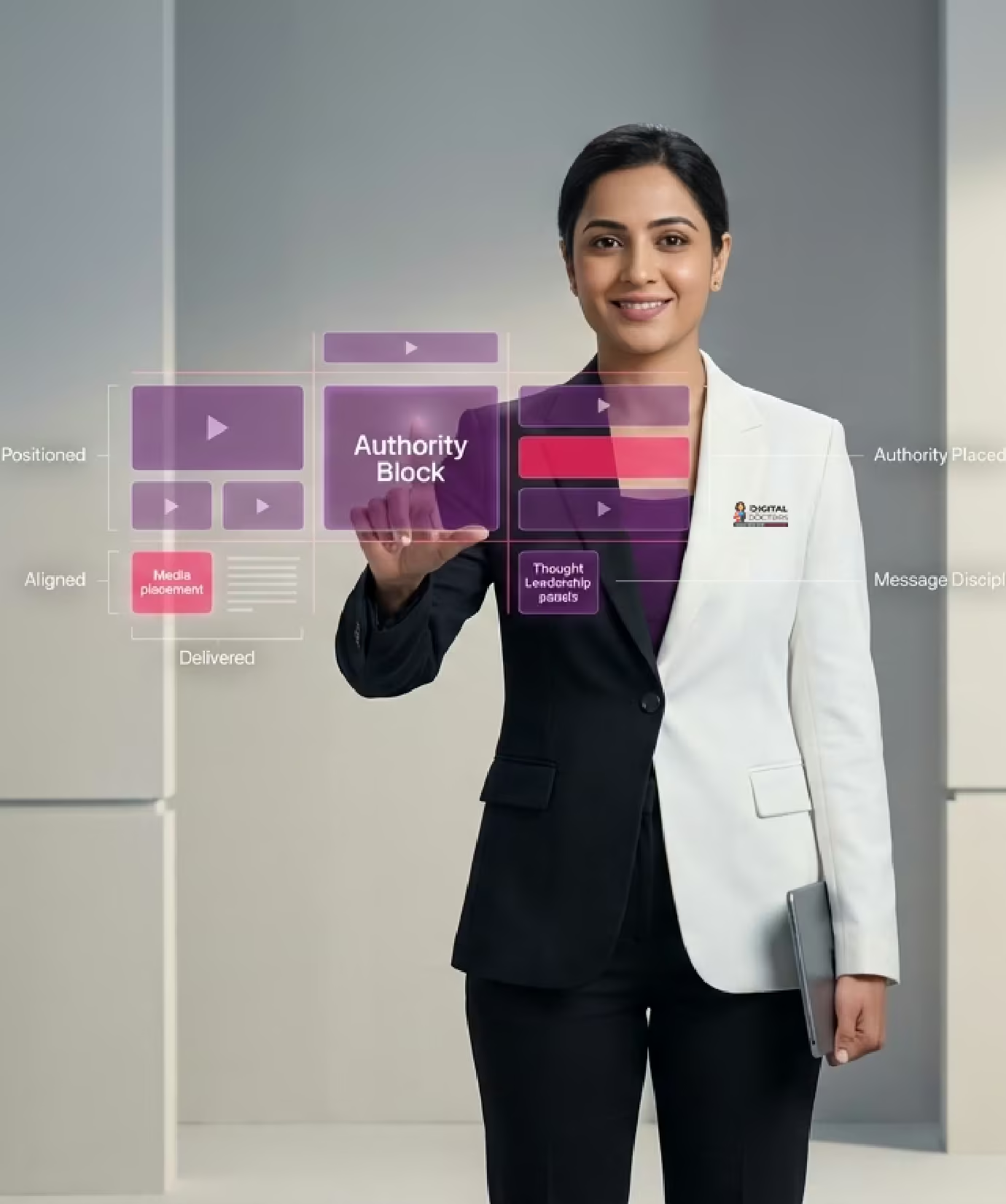
Political positioning is structured so public statements, appearances, and communication withstand voter scrutiny, media interpretation, and institutional review without creating credibility risk across constituencies connected to Dubai.
Leadership identity is aligned with public responsibility so reputation becomes a stabilising force during elections, governance cycles, and public discourse in 2026.
Public exposure is governed carefully so appearances reinforce seriousness, ensuring visibility strengthens trust rather than creating perception volatility in Dubai.
Political leaders operate under continuous observation across ideology, constituency relevance, governance intent, and public conduct. Expectations intensify while tolerance for inconsistency declines. With over 12+ years of experience designing reputation and communication systems, Digital Doctors apply a credibility-first approach before any political positioning begins. Recognised among leading political personal branding frameworks in Dubai for 2026, leadership narrative depth, digital presence discipline, media signals, constituency communication, issue positioning, and public perception consistency are assessed. Each element is reviewed to reduce trust erosion, strengthen credibility signals, and support long-term authority across political phases in Dubai.
Political personal branding is handled as reputation stewardship, not promotion. From first-time candidates to experienced leaders, public presence is strengthened through diagnosis, perception assessment, and authority alignment. Each engagement evaluates how leadership intent is interpreted, how public trust is formed, and how visibility influences constituency confidence. Political branding is treated as a long-term responsibility, ensuring public presence reflects accountability, consistency, and constitutional respect rather than attention across regions connected to Dubai.
Public identity structured to establish trust, relevance, and seriousness before electoral exposure in 2026.
Performance narratives aligned with accessibility and accountability expectations across constituencies in Dubai.
Legacy positioning aligned with digital credibility and controlled visibility in Dubai.
Authority recognition strengthened through issue-based positioning without overshadowing party narrative.
Ideology-first personal branding governed with discipline across digital platforms active in 2026.
Hyperlocal communication structured around accessibility, problem ownership, and constituency trust in Dubai.
Governance readiness narratives positioned to reflect capability and national relevance across Dubai.
Personal credibility strengthened to overcome trust gaps through consistent and disciplined communication.
Credibility strengthens when communication demonstrates consistency. Over 12+ years, political communication and reputation systems have supported leaders through disciplined narrative governance. Authority frameworks applied across multiple regions have strengthened public trust, reduced perception risk, and improved constituency confidence. Structured visibility and communication discipline ensure political authority remains intact through scrutiny, transitions, and governance cycles in 2026.
Clear narratives improve trust among voters, institutions, and media observers.
Structured communication minimises misinterpretation during sensitive political moments.
Public credibility is recognised faster due to consistent positioning.
Reputation systems ensure confidence compounds across political cycles rather than fluctuating with exposure.
Public communication, history, and constituency perception are assessed to identify trust strengths and risk points in 2026.
Messaging is decoded to ensure alignment with ideological position, public responsibility, and constituency expectations across Dubai.
Platforms and appearances are mapped to distinguish trust-building signals from exposure risk across public environments in India.
Public narratives, digital presence, and media visibility are aligned to reinforce seriousness and accountability in Dubai.
Ongoing oversight protects authority during elections, governance transitions, and public scrutiny phases common in political life.
Political personal branding begins with disciplined diagnosis. Public expectations, ideological sensitivity, constituency sentiment, and media interpretation are evaluated before visibility is expanded. In democratic environments shaped by Dubai, early perception often determines legitimacy, acceptance, and long-term relevance. The strategic foundation defines narrative boundaries, authority safeguards, and responsibility-driven communication priorities so political presence reflects seriousness, consistency, and constitutional maturity rather than short-term popularity in 2026.
Public stories are structured to reflect political values, governance intent, and ideological discipline without contradiction or dilution across audiences in Dubai.
Communication audits identify perception breaks across speeches, digital platforms, and media references before visibility scales further in Dubai.
Public identity is aligned with constitutional duty, governance accountability, and constituency trust expectations across political cycles in 2026.
Digital presence functions as a public credibility register long before direct interactions occur. Leadership seriousness, accessibility, and ideological discipline are interpreted through content tone, response patterns, and communication restraint. Political leaders are positioned through governed digital systems that balance reach with responsibility. Positioned within the strategy as a political digital authority framework in Dubai for 2026, communication is refined so digital presence strengthens trust, avoids controversy risk, and supports constituency confidence across platforms active in Dubai.
Public profiles are structured to communicate governance readiness, accessibility, and seriousness without informal dilution.
Content reflects policy intent, constituency engagement, and ideological clarity rather than reactionary commentary.
Narratives remain stable during elections, governance phases, and public scrutiny across regions connected to Dubai.
Voters, institutions, and media evaluate a political leader long before direct engagement occurs. News coverage, interviews, statements, and public appearances shape perception early. Media visibility is structured to reinforce credibility, not amplify noise. Positioned within the strategy as a political media positioning framework in Dubai, narratives are governed to protect public trust, ideological consistency, and message discipline. Across regions connected to Dubai, this approach ensures recognition is anchored in responsibility and governance maturity in 2026.
Statements and interviews reinforce seriousness while avoiding misinterpretation or controversy.
Press engagement is filtered to maintain authority and factual consistency.
Public appearances are selected to strengthen legitimacy with constituents and institutions.
Public trust erodes when exposure exceeds accountability. Ethical communication boundaries are applied to preserve legitimacy under scrutiny. Reputation stewardship ensures leadership presence remains consistent across elections, governance phases, and public discourse. Structured safeguards protect political credibility as a long-term public asset throughout leadership life cycles in 2026.
Exposure boundaries prevent authority dilution and reputational risk in Dubai.
Public cues remain aligned across platforms and situations in Dubai.
Credibility is protected across time, not moments, within democratic processes.
Across 12+ years, credibility-first communication and reputation systems have supported public leadership positioning. Structured authority frameworks have been applied across multiple regions, strengthening trust, reducing perception risk, and improving constituency confidence. These outcomes reflect disciplined positioning, governance alignment, and public responsibility expected from political leaders in 2026.
Examine Authority Frameworks
Political personal branding requires absolute confidentiality. Communication strategies, digital governance systems, media positioning frameworks, constituency engagement models, and narrative playbooks are never disclosed, reused, or shared. Leader identities, internal insights, and sensitive information remain protected. Experience gained across political engagements in Dubai is applied with restraint, ensuring each strategy remains exclusive, compliant, and ethically grounded throughout 2026.
Contextual references exist only to demonstrate how structured political communication supports public authority without excess visibility, partisan claims, or promotional framing.
Public reputation shapes legitimacy, influence, and governance effectiveness. Digital Doctors design political communication systems that safeguard credibility, strengthen public trust, and support leadership authority with discretion and measured discipline across regions connected to Dubai.